The Basics of the System
Introduction
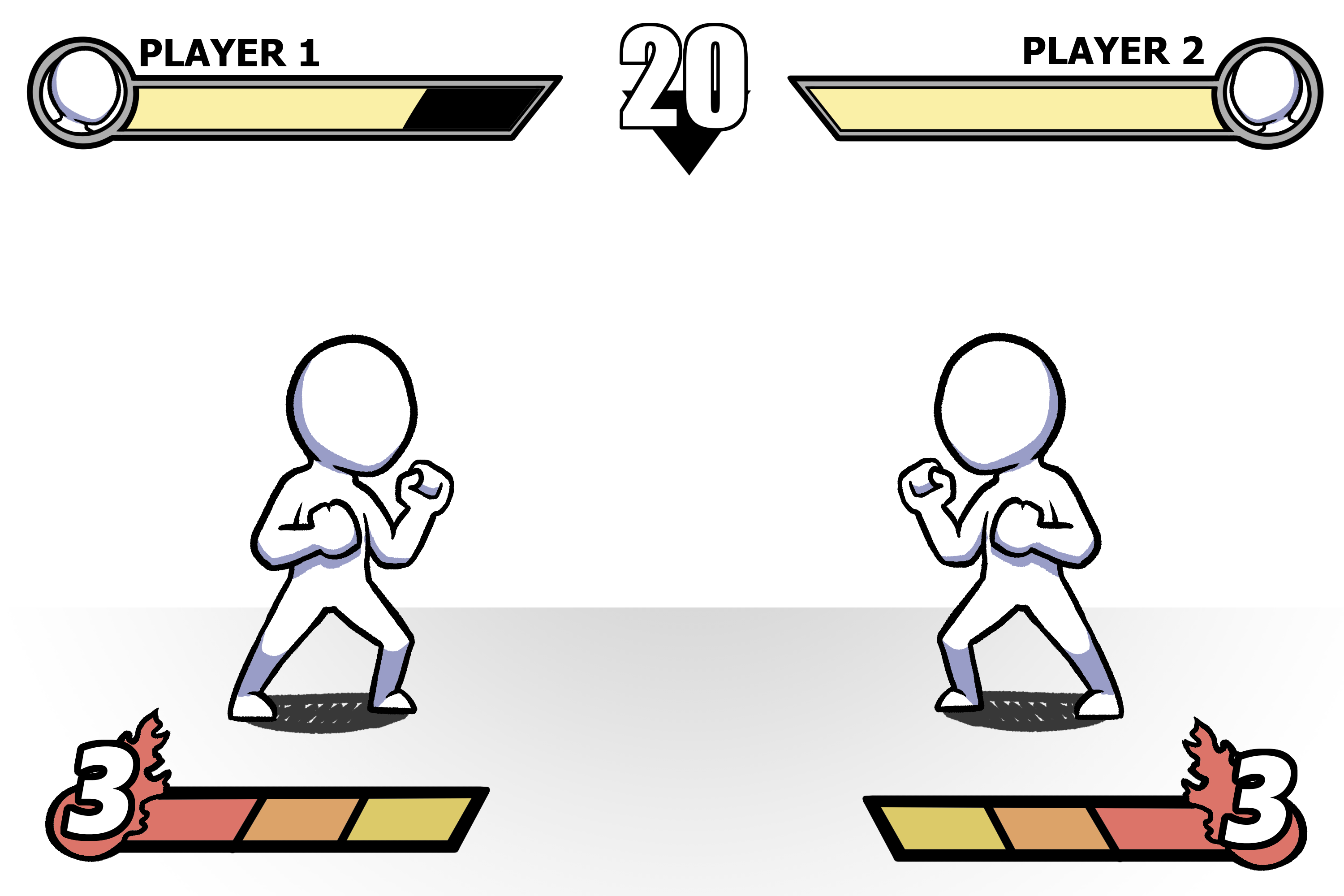
Although each fighting games have unique aspects of their system, several aspects tend to be either identical or extremely similar. In this section we will start by examining the HUD (Heads Up Display) and its common components. Then we will examine movement and actions
The HUD
Every fighting game has a Heads Up Display (HUD) that provides important information relevant to the current match. While there are always game-specific elements to the HUD, we'll go over some of the more consistently present components
Health Bar
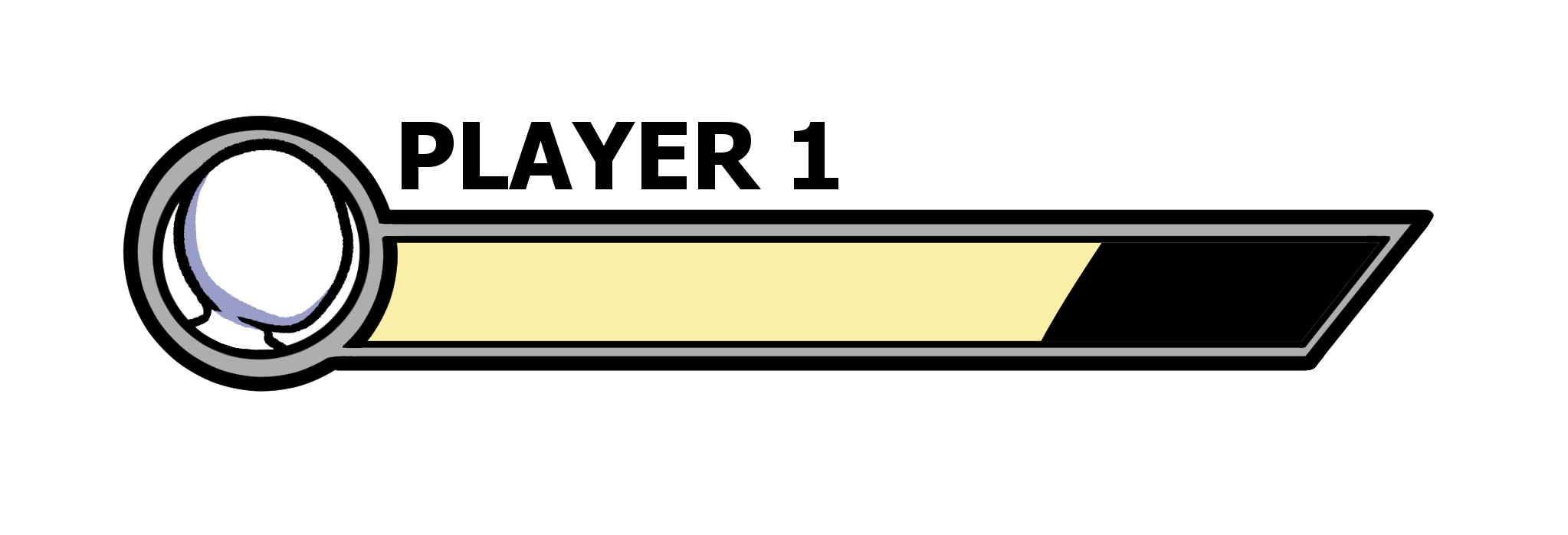
Each player has a health bar indicating how many hits they can take. As you might expect, the round ends when a player's healthbar is depleted or the timer reaches zero, more on that in the next section.
Timer

Most fighting game matches consist of two rounds. However, we don't usually want each particular match to take too long. Enter the timer. The timer counts down to zero, and once zero is reached, the round ends. Whichever player had the most health when the timer hit zero is declared the winner of that round. The idea is that if you're in the lead as far as health goes, it is your opponents responsibility to try to approach and put themselves ahead. It's an incentive to keep the action going, though, admittedly this doesn't always work and at times this leads to quite the opposite, with players deliberately stalling to win the match by timeout. While at times legitimate strategy, victories by timeout are seen as "cheap" and are generally frowned upon.
Meter
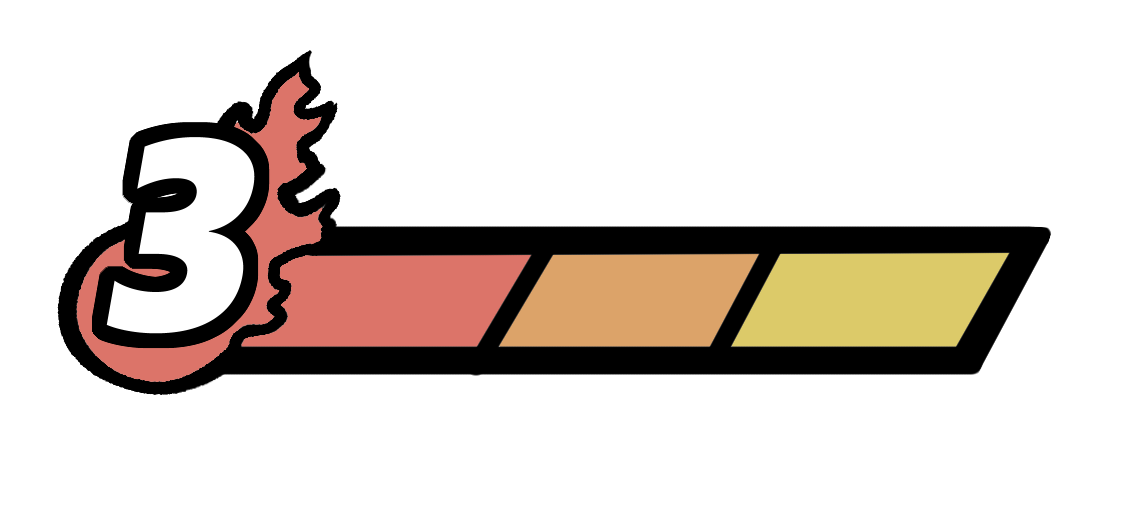
Most fighting games now a days have some form of meter that allows the use of special actions. These special actions include using powered up versions of your attacks, making attacks "safe" (see the Attacking section below) and using super attacks. The meter typically increases as you perform correct actions such as landing hits and blocking effectively. Conversely, meter is used up partially or entirely by using the special actions it enables. Strategic use of techniques enabled by the meter often separates new players from the more experienced.
Movement
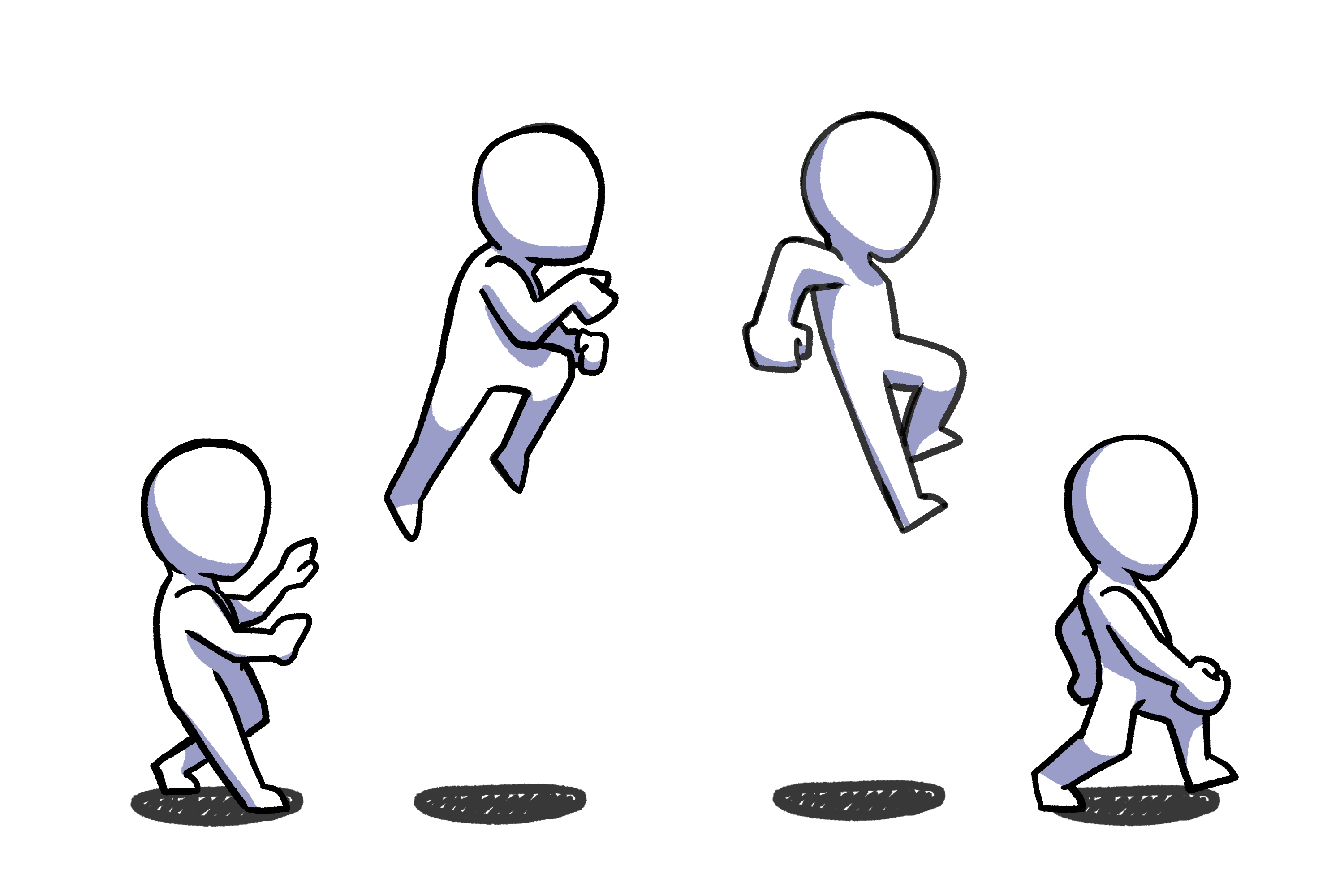
Movement options vary by fighting game, but generally consists of moving left and right on a 2 dimensional plane of a set width. Furthermore, you can jump and crouch. Of special note is that jump arcs are usually set. This means you can't change the trajectory of your jump once you've committed to a direction, as you can in many games of other genres. Sometimes games also include a dash, executed by double tapping in one direction. These are utilized for positioning (sometimes even in the air during your jump) and evasion (such as dashing backwards out of the range of an attack).
Blocking
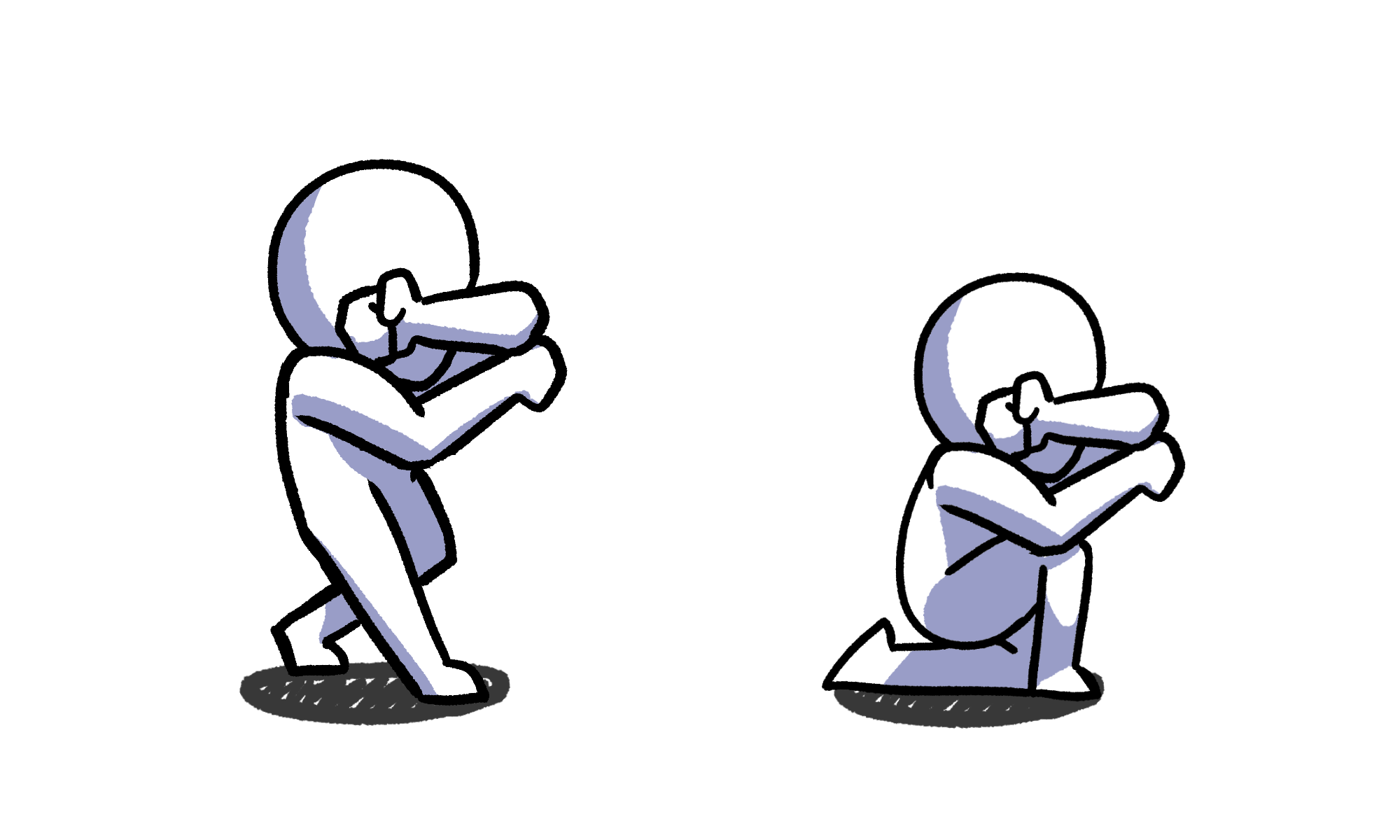
A fighting game is both about good offense and good defense. The most common way to block in fighting games is to simply hold away from your opponent, though some games have a specific button associated with blocking. You can't simply kick back and hold away to stop all incoming damage though. There are two basic types of blocking: Blocking high and blocking low. Blocking high blocks high attacks and blocking low blocks low attacks. Makes sense right? Blocking high is achieved by simply holding away from the opponent, while blocking low is achieved by holding away while crouching. Your job when your on defense is to correctly block your opponent's incoming attacks. Furthermore, sometimes certain attacks can deal a tiny bit of damage even if you're blocking. This is known as chip damage. Finally, while blocking stops normal attacks, there is another offensive option known as "grabbing" that beats blocking. Think of it as a rock-paper-scissors relationship. Blocking beats attacking, attacking beats grabbing and grabbing beats blocking. You can deflect grabs (known as teching) usually by performing a grab at the same time as your opponent attempts to grab.
Attacking
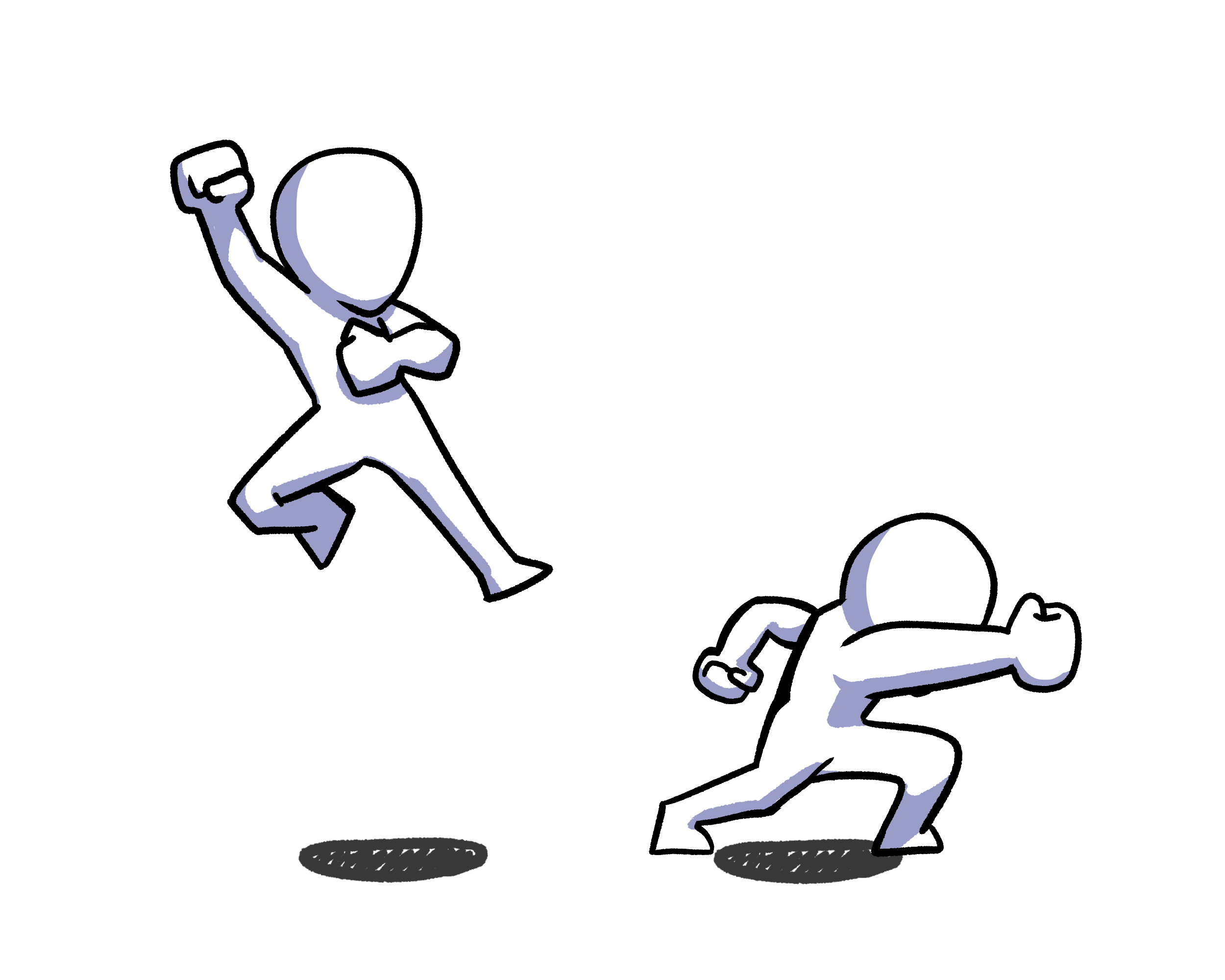
The most important part of a fighting game, the actual "fighting" part of the game. We mentioned high and low blocking, which each block high and low attacks. There's a third type of attack which are simply neutral attacks that are block by either low or high blocking. High attacks area usually performed during a jump, but there are high attacks that can be performe don the ground (known as "overheads"). Attacking low is performing by attacking while crouching and neutral attacks are attacks done while neither jumping or crouching. You job when you're on the offense is to mxi up your attack patterns in such a way that your oppenent blocks incorrectly and therefore gets git. The attacks we've described up to now are known as "normals", attacks that happen at the click of a button. Depending on the game, you will have anywhere from one to six normal buttons! Aside from these attacks, every character has a set of special moves that require specific inputs. We'll cover them next!